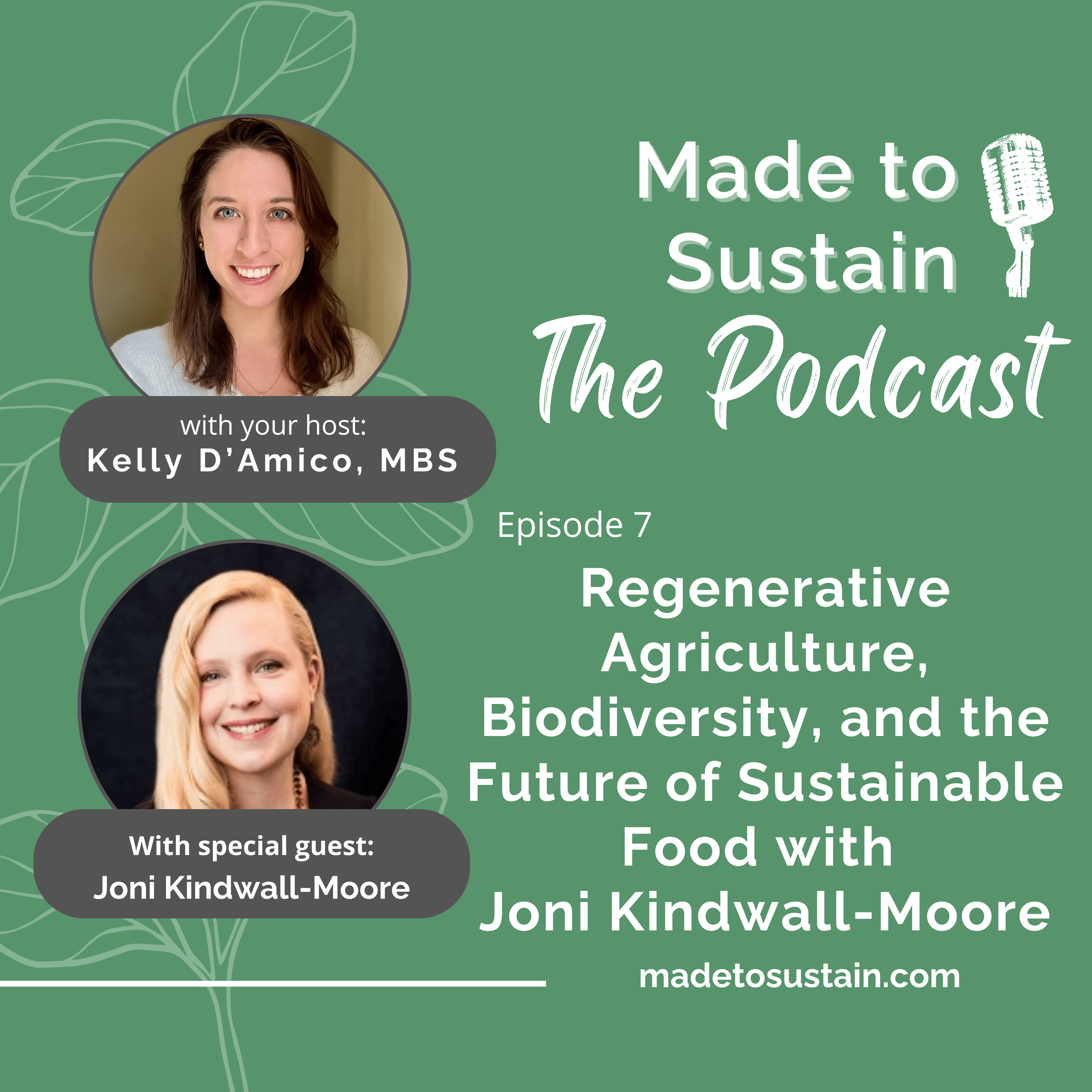
S1E7: Exploring Regenerative Agriculture with Joni Kindwall Moore: Insights from the Made to Sustain Podcast


This week’s episode of the Made to Sustain podcast provides a deep dive into the world of regenerative agriculture, featuring a fascinating conversation with Joni Kindwall Moore. Joni, who has an intriguing background in ethnobotany, ethno pharmacology, and nursing, shares her wealth of knowledge and passion for transforming our food systems through her company Snacktivist. Let’s explore some of the key insights from her conversation with our host, Kelly D’Amico.
Understanding Regenerative Agriculture
Joni explains that one of the foundational principles of regenerative agriculture is always having soil armor—keeping a living root in the ground as much as possible. This practice helps combat wind and water erosion, especially in regions like the Pacific Northwest and Northern Rockies. As climate change accelerates, farmers face the challenge of adapting their agricultural practices to sustain their livelihoods. Joni emphasizes that the answer lies in diversifying crops to respond to longer and hotter growing seasons, which can also open up new revenue streams for farmers.
The Role of Underutilized Crops
During their discussion, Joni highlights the potential of underutilized crops like sorghum and millet. These crops are not only drought-tolerant but also play a significant role in crop rotation, helping maintain soil health and improve grain yields. Snacktivist, Joni’s company, has built its innovation program around these crops, offering products such as pizza crusts and baking mixes made from sorghum and millet. This approach not only brings variety to our diets but also supports sustainable farming practices.
The Human Health Benefits of Crop Diversity
Joni connects her background in ethnobotany and ethno pharmacology to her work in agriculture, emphasizing the health benefits of crop diversity. She advocates for reintroducing medicinal phytonutrients into staple foods to drive healthy gut microbiome, cardiovascular health, and potentially even anti-cancer benefits. Joni’s approach aims to meet people where they are, offering improved staples like better burgers and pizzas rather than restrictive diets. This practical strategy not only supports health but also appeals to wider consumer preferences.
Bridging Science and Innovation
Joni’s journey from hard sciences to entrepreneurship showcases the importance of applying scientific principles to real-world problems. Recognizing the complexity of food systems, Joni discusses her work with various partners to bring innovative, regenerative products to market. She emphasizes the necessity of integrating biological systems with modern scientific understanding to create balanced, sustainable food models.
The Future of Regenerative Agriculture
When asked about the scalability of regenerative agriculture, Joni remains optimistic. She believes that with the right support, including advanced agronomy and AI, regenerative practices can and will be adopted at scale. This paradigm shift is essential for maintaining soil health, combating climate change, and ensuring a nutritious food supply.
Key Takeaways
Here are the top takeaways from this insightful episode:
- Regenerative agriculture focuses on maintaining soil health through practices like crop rotation and continuous ground cover.
- Underutilized Crops crops such as sorghum and millet offer considerable benefits in terms of drought tolerance, soil health, and nutritional value.
- Incorporating diverse crops into our diets can enhance our health by reintroducing beneficial phytonutrients.
- Innovative, science-backed approaches are essential for transforming our food systems.
- With the right technology and support, regenerative agriculture can be scaled to meet global food demands sustainably.
Joni’s insights on regenerative agriculture highlight the importance of being mindful of where our food comes from. As consumers, we can play a role by choosing more diverse and nutritious foods, supporting sustainable practices, and staying informed about the science behind our food systems.
Tune In Next Week
Make sure to join us next week for an exciting conversation with Anna Hammond, founder of Matriark Foods. We’ll explore her innovative approach to upcycling tomato sauce and her grassroots efforts in the sustainable food movement.
If you enjoyed this episode of Made to Sustain, please leave us a five-star review and share the podcast with a friend. For more insights on food sustainability and exciting recipes, visit Made to Sustain dot com and sign up for our weekly newsletter.
Together, our collective actions can make a difference in creating a more sustainable food system. Thank you for being part of this journey with us!
Discover more from made to sustain
Subscribe to get the latest posts sent to your email.