How to Make Perfect Homemade Mashed Potatoes (Easy Recipe)

With Thanksgiving quickly approaching, you might be upset if you don't see mashed potatoes on the table. Mashed potatoes are a part of a series of classic comfort foods like mac and cheese, especially during the colder months. Here’s a simple yet effective approach to making creamy, flavorful mashed potatoes with tips from a food scientist. If you're looking for a quick recipe, you're in luck! Here's how to make mashed potatoes for any occasion!
Making mashed potatoes is a door opener to learning how to make other potato recipes such as shepard's pie, gnocchi, twice-baked potatoes, or potato pancakes. From equipment to the types of potatoes to what to pair with mashed potatoes, we've got you covered with all of the answers. After reading this post, you'll be prepared to know how to make mashed potatoes for the holidays!
Choosing the Right Potatoes
Selecting the right potatoes is step one. Since potatoes are primarily made up of a mix of starches, sugars, and plant material, different ratios of these components change the texture and taste. The type of potato you choose will impact your final texture. For a fluffy, creamy texture, go with a potato with a high starch content. The starches end up thickening up the potatoes and give a great creamy texture, while sugar forward potatoes like russet potatoes or Yukon Gold potatoes. Russets will create a fluffy mash, while Yukon Golds offer a buttery flavor that’s naturally creamy.
Think back to your favorite mashed potatoes and decide which texture you like better. Was it dense and creamy or was it fluffy texture? This will help you decide on the best potatoes to choose for your recipe. In this video, we’re using Russet Potatoes.
Equipment You’ll Need
The equipment you’ll need to make mashed potatoes is minimal, but all necessary. We’ll have a few extra options.
- Medium Sized Pot
- Vegetable Peeler (optional if you want to keep the skins on)
- Potato Masher
- Wooden Spoon or Spatula
- Cutting Board
- Chef’s Knife
- Strainer
Optional Equipment:
- Blender or food processor instead of a potato masher
- Potato Ricer
- Vegetable Scrubber
- Instant pot
- Hand-held electric mixer
Basic Mashed Potato Recipe
While there are many great mashed potato recipes on the internet, this is an easy go-to recipe that can be used as a canvas for your perfect side dish. You can also use this recipe with sweet potatoes.
- 4 Russet Potatoes
- ½ Cup Whole Milk
- 1 onion, diced
- 4 cloves garlic, minced
- 3 tbsp salted butter
- Kosher Salt
- Black Pepper to taste

How to Make Mashed Potatoes – Step by Step
Preparing the Potatoes
Potatoes grow in the ground. So it’s important to wash them well and get the dirt off. We have a vegetable scrubber here to remove any dirt. Whether you leave the skins on or not, you definitely don’t want dirt in your mash.
Benefits of Keeping the Skins On
Instead of peeling your potatoes, consider leaving the skins on. Potato skins are nutrient-rich, packed with fiber, B vitamins, and iron. Keeping them also minimizes food waste and saves prep time. Plus, the subtle texture and rustic look add a homey charm to the final dish. It’s up to you how you prefer your potatoes.
Cutting the Potatoes
Whether or not you’ve peeled the potatoes, it’s important to cut them into uniform-sized pieces. This will ensure that they cook evenly. Avoid too large chunks, which will take a long time to cook.
Cooking the Potatoes
Place them in a large pot of boiling, salted water. Once you add your potatoes, reduce the temperature to a simmer.
Cook until the potatoes are fork tender – which means when you test it with a fork, it should easily pierce the potato and the potato should fall off. Make sure you test a few potatoes to make sure they are cooked evenly. This should take about 15-20 minutes.
Once they are finished cooking, strain the potatoes using a strainer or colander. Let the steam escape, which helps prevent overly watery mashed potatoes.
Mashing the Potatoes
There are two important things to note before you start mashing your potatoes. To start, make sure you have a stable work surface. I do this by putting a towel underneath a cutting board and then placing the pot on it to ensure it doesn’t slip.
You should also make sure that you have hot potatoes before you begin to mash them. If you’re using a Dutch oven like I did, it will retain the temperature and keep the potatoes warm. They are much easier to mash when they are warm!
You should add some milk and some butter while you mash to help loosen up the texture. You can always add a little extra milk if you prefer a creamier texture.
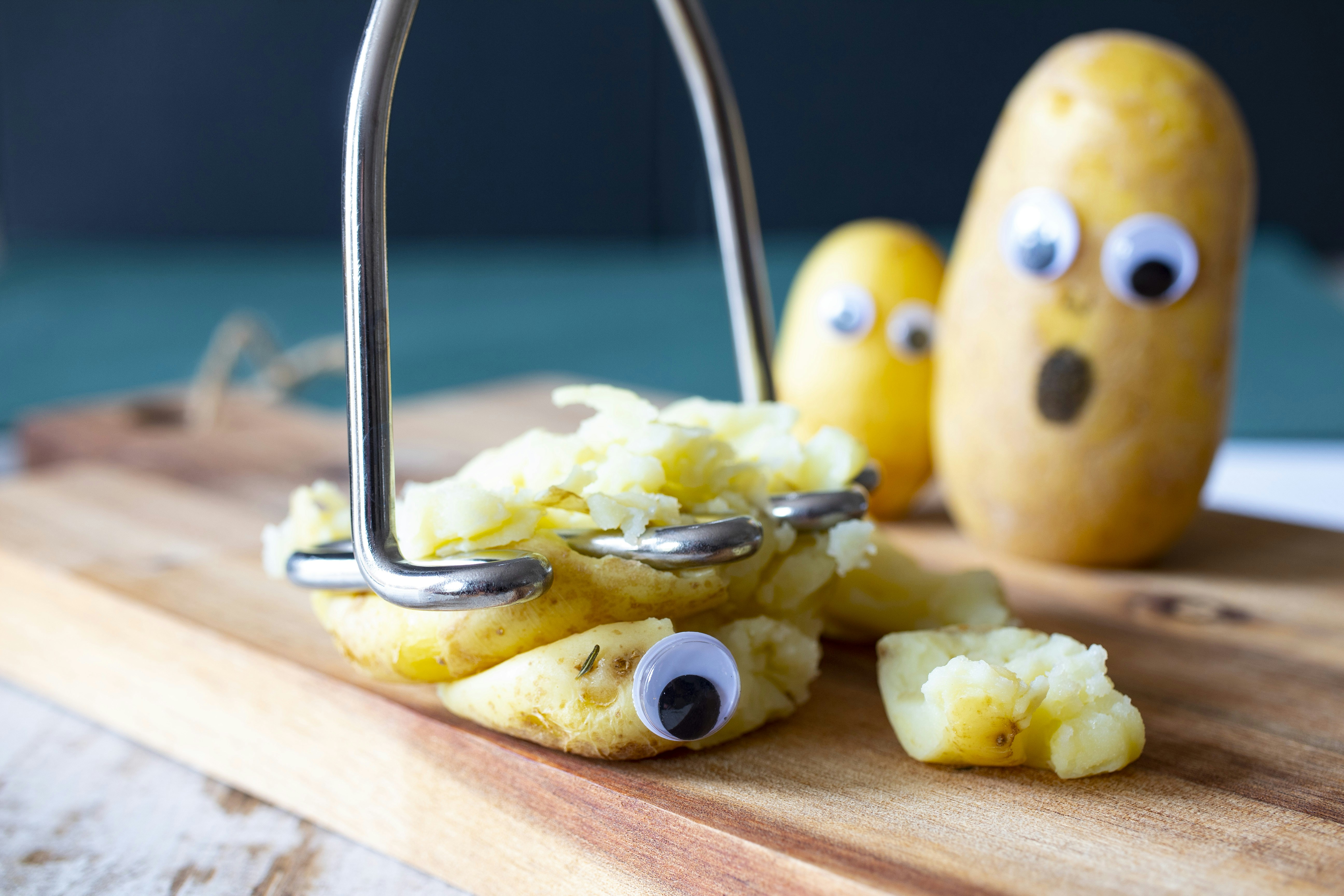
I always use a hand masher whenever I make mashed potatoes. It will definitely take a bit of elbow grease to make sure they are fully mashed. Mine usually take up to 10 minutes to get a consistent texture throughout the batch. However, if this doesn’t sound appealing to you, here’s a couple of tips and tricks to make mashing easier.
Make sure You Subscribe
Special Tricks & Simple Tips for Making Mashed Potatoes
If mashing for ten minutes seems like too much work for you, there are a few ways around this. You can use a potato ricer, which pushes the potatoes through small holes to create very fine textures with the potatoes.
You can also blend them with a hand mixer, but be sure you don’t over-blend them, as they will get to a gummy texture.
Adding Flavor to Mashed Potatoes
There are so many different ways that you can add flavor to your mashed potatoes – it’s all a matter of personal preference.
While the potatoes are releasing steam, you can sautee some aromatics like garlic, shallots, or onions. I recommend sauteeing them in butter or olive oil over medium heat. I like to use the same pot I cooked the potatoes in and then add the warm potatoes right before I'm about to mash them. However, you can always use a small saucepan if that's easier.
Some other simple ingredients that you can use include herbs and cheese for extra flavor. Some great flavor combinations include:
- Cheddar Cheese + Dill
- Parmesan Cheese + Roasted Garlic + Rosemary and Sage
- Goat Cheese + Dill
What to Pair with Mashed Potatoes:
While mashed potatoes are usually the side dish, my favorite thing to do with them is make a mashed potato bowl. The idea here is to use toppings you would use in a baked potato such as cheddar cheese, sour cream, broccoli, and baked beans. This is a great way to take a beloved comfort food from a side dish to a main dish!
Storing and Reusing Leftover Mashed Potatoes
Store leftover mashed potatoes in an airtight container in the fridge for up to four days.
Leftovers can be transformed into potato pancakes, croquettes, or added to soups for creaminess. Check out our post here on how to reuse your leftover mashed potatoes to reduce food waste and give your dish a second life!
Discover more from made to sustain
Subscribe to get the latest posts sent to your email.